
Volcano Mulching
- Traps moisture against the trunk.
- Can lead to root rot and decay.
- Creates a tight barrier around the base.
2026-07-03
Did you know that the right mulching depth can significantly enhance the health and vitality of your trees? Understanding the optimal 2–4 inch rule is not just about aesthetics; it's crucial for nutrient absorption and moisture retention. Let's explore some essential takeaways that will empower you in your gardening journey.
The following visual representation illustrates the differences between volcano and donut mulching techniques and their effects on tree roots and moisture retention. This knowledge is an essential part of essential tree care and landscaping for any gardener.
- Traps moisture against the trunk.
- Can lead to root rot and decay.
- Creates a tight barrier around the base.
- Promotes healthy root flares.
- Allows for necessary air circulation.
- Reduces risk of moisture-related decay.
- Recommended depth is 2–4 inches.
- Enhances nutrient absorption.
- Improves soil moisture retention.
When it comes to nurturing trees, one of the simplest yet most effective practices is mulching. The 2–4 inch rule for mulching depth plays a critical role in ensuring that trees receive the nutrients they need. A proper mulch layer aids in nutrient absorption, improves soil moisture retention, and promotes overall root health. Think of mulch as a protective blanket; it keeps the soil temperature stable and reduces water evaporation.
When you apply mulch correctly, it allows your tree roots to breathe while still retaining the moisture they crave. For me, watching the trees thrive after mulching is a rewarding experience. It’s like giving them a cozy home where they can flourish! Understanding how to properly mulch can make all the difference in your gardening success.
Choosing the right mulching depth is vital for several reasons. First and foremost, it helps with nutrient absorption. When mulch is too shallow, it can dry out quickly, while too much can suffocate the roots and prevent air from reaching them. Aim for that sweet spot of 2 to 4 inches to create an ideal environment for your trees.
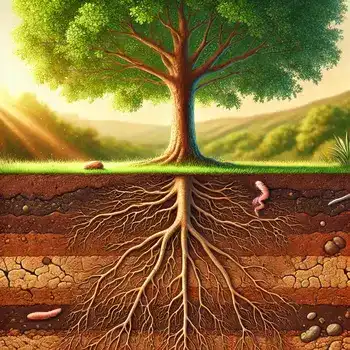
Additionally, proper mulching can significantly enhance soil moisture retention. This is especially important during dry spells when trees rely on stored moisture to survive. A well-mulched tree will have a more resilient root system, ready to face the challenges of changing weather. Let’s not forget that using organic mulch can also introduce beneficial microorganisms into the soil, further boosting tree health! For more insights, explore how mulch benefits tree root health.
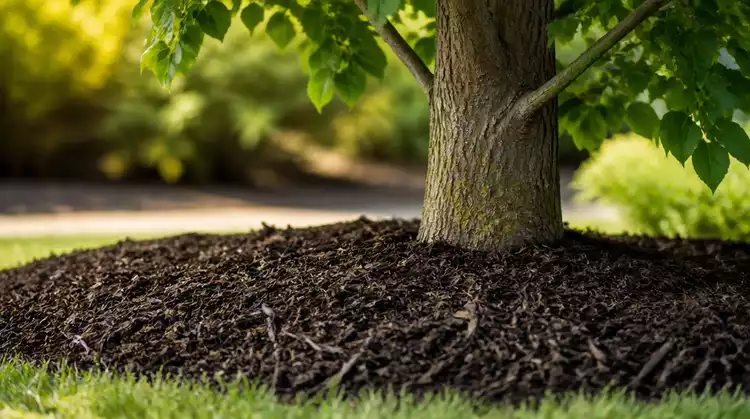
One common mistake many gardeners make is volcano mulching. This involves piling mulch high around the base of the tree, often resembling a volcano—hence the name. While it may look appealing, it can cause significant harm by trapping moisture against the trunk, leading to rot and decay. In contrast, the donut mulching technique supports healthy root flares by keeping mulch away from the trunk. This encourages the tree roots to grow outward, not inward!
Volcano mulching may seem harmless, but it can lead to serious problems. I often say, it’s better to think of mulch as creating a protective donut around your tree! The donut method creates a barrier that protects the tree while allowing for necessary air circulation and moisture management. It’s all about making informed choices that benefit our trees.
Your choice of mulch material also influences how deep you should apply it. Not all mulch is created equal! Different materials have varying properties that can affect the ideal depth. Understanding these differences can help you provide the best care for your trees while adhering to the 2–4 inch guideline. For instance, coarse wood chips might be applied slightly deeper than finer, composted materials to achieve the same benefits.
In the next section, we’ll dive deeper into how various mulch types—like wood chips, bark, and compost—can impact your mulching strategy. It’s fascinating to see how these materials can work together to enhance soil health and tree vitality. As we explore, remember that making the right choices can lead to a flourishing garden!
Here's a brief recap of the key points discussed so far:
Here are some common questions to help you further understand proper mulching techniques:
In summary, the ideal mulching depth of 2–4 inches is essential for promoting tree vitality. This depth helps with nutrient absorption, soil moisture retention, and overall root health. By adhering to this guideline, you can create a thriving environment for your trees while also enhancing soil quality.
Proper mulching not only protects the roots but also supports healthy growth and resilience against environmental stressors. Remember, it’s not just about covering the soil; it's about creating a nurturing space that allows your trees to flourish. Through our exploration at Deep Roots Journal, I've come to appreciate how these practices are crucial for sustainable horticulture. Consistent watering techniques for tree roots, combined with proper mulching, create an optimal growing environment.
One of the most significant mistakes gardeners can make is volcano mulching, which can suffocate a tree’s roots and lead to detrimental effects. Instead, a proper "mulch donut" technique allows for healthy root flares, ensuring your trees have the best chance to thrive. Here are some tips to avoid common mulching mistakes:
By being mindful of these practices, you're not just caring for your trees; you're contributing to a healthier ecosystem. Every little effort makes a difference, and at Deep Roots Journal, we encourage you to become advocates for proper mulching methods! You can further enhance your efforts by learning about soil compaction's effect on roots and how to mitigate it.
Now, I’d love to hear from you! What has been your experience with mulching depth and tree care? Have you encountered any challenges or successes? Sharing your stories helps build our community and enriches our collective knowledge. If you have questions or tips, feel free to drop them in the comments below! Your insights can inspire others on their gardening journeys.
Here is a quick recap of the important points discussed in the article:
Rowan Thorne
Horticulturist. Environmental advocate. Nature enthusiast.
Rowan Thorne brings years of hands-on experience in botany and root care, sharing practical tips and expert insights to help you nurture a thriving natural environment. Follow along at DeepRootsJournal.com for fresh, inspiring content that deepens your connection to the ecosystem.
Discover the intricate world of tree species, soil health, and root care through our expert insights. We are passionate horticulturists dedicated to helping you cultivate a thriving natural environment.