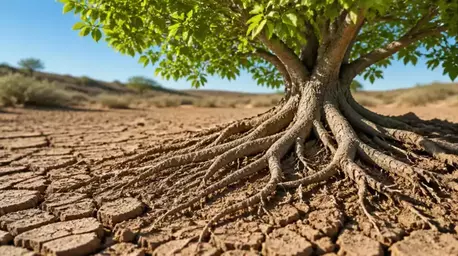
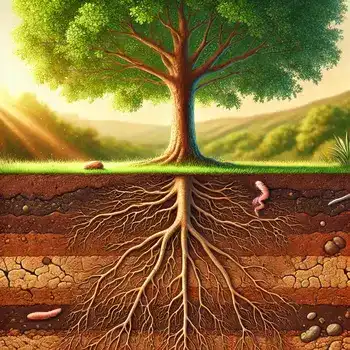
Every gardener knows that the roots are the lifeblood of trees, yet many overlook how easily they can be harmed by common practices. Proper education on root health can lead to flourishing gardens and strong trees. Are you ready to discover how to protect one of your garden’s most vital components?
What You Will Learn
The hidden risks posed by lawn equipment to tree roots, including soil compaction and root cutting.
Recognizing different types of mechanical injuries, such as bark scraping, that can impact tree health.
Key steps to take immediately after a root damage incident to help trees recover effectively.
Best practices for lawn recovery, including reseeding and fertilizing to support tree root health.
The importance of periodic maintenance checklists to ensure the long-term health and safety of trees.
Sustainable landscaping practices that can benefit both trees and the surrounding ecosystem.
Understanding the Impact of Lawn Equipment on Tree Roots
Examining the common types of mechanical injury and the steps to mitigate root damage from lawn equipment. For more comprehensive insights into maintaining robust root health, explore our guide on essential tree care and landscaping.
Common Types of Mechanical Injury
Soil Compaction: Heavy equipment can compact the soil, making it harder for roots to expand.
Bark Scraping: Trimmers and mowers can scrape bark, exposing the tree to disease.
Root Cutting: Direct contact with mower blades can sever roots, disrupting nutrient flow.
Steps to Take After Mechanical Injury
Loosen compacted soil around the tree.
Prune away any damaged bark gently.
Water the tree deeply to promote recovery.
Lawn Recovery Techniques
Reseed bare areas with grass seed.
Apply fertilizer to encourage growth.
Keep the soil consistently moist.
Importance of Aeration
Aeration allows air, water, and nutrients to penetrate deeper, essential for the recovery of both the lawn and tree roots.
Understanding Root Damage and Its Causes
As a horticulturist, I often emphasize that tree roots are the unseen heroes of our gardens. They play a crucial role in absorbing water and nutrients, helping our plants thrive. However, these roots can become damaged, often without us even realizing it. Understanding what causes root damage is essential for anyone looking to maintain a healthy garden.
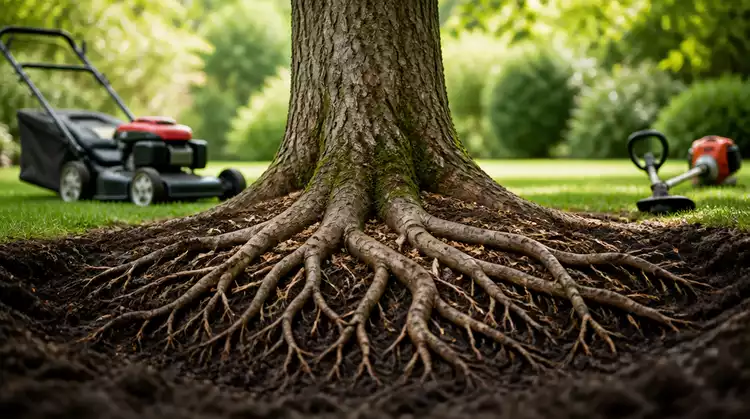
One of the main culprits of root damage is lawn equipment. From lawn mowers to trimmers, these tools can unintentionally harm the delicate root systems of trees. It's important to be aware of how our gardening practices can impact tree health and take preventative measures to protect these vital structures.
The Impact of Lawn Equipment on Tree Roots
Lawn equipment can pose significant risks to tree roots, especially when we’re not vigilant. The weight of mowers and other machines can compact the soil, making it difficult for roots to breathe and absorb water. This stress can lead to a decline in tree health, resulting in slower growth and increased susceptibility to disease. Understanding how to prevent soil compaction's effect on roots is crucial for long-term tree vitality.
In addition to soil compaction, the blades of lawn mowers can easily slice through roots if the equipment is used too close to the base of a tree. This can cause not only physical damage but also expose the roots to pathogens. Regularly assessing our gardening methods can help mitigate these risks and ensure our trees remain vibrant.
Be mindful of equipment placement during lawn maintenance.
Limit the use of heavy machinery near tree bases.
Consider using manual tools for precision around delicate roots.
Common Types of Mechanical Injury from Lawn Equipment
It's crucial to recognize the types of mechanical injuries that can occur from lawn equipment. There are several common forms of damage that can impact tree roots:
Soil Compaction: Heavy equipment can compact the soil, making it harder for roots to expand.
Bark Scraping: Trimmers and mowers can scrape bark, which may expose the tree to disease.
Root Cutting: Direct contact with mower blades can sever roots, disrupting nutrient flow.
Each of these injuries can have detrimental effects on tree health. By understanding these risks, we can better protect our trees and maintain a flourishing garden. Always remember that every action we take in our garden matters, from how we mow to the tools we choose to use. Our trees depend on us to keep their roots safe!
Pro Tip
Did you know? Regularly using a soil moisture meter can help you accurately determine when your trees need water, especially after mechanical injuries. This simple tool provides insights into soil conditions, allowing you to tailor your watering schedule and promote optimal root recovery.
Responding to Root Damage Incidents
When a tree suffers from root damage, it can be distressing for any gardener or tree lover. The first thing to remember is that prompt action can make a significant difference in the recovery process. By understanding the steps to take after a mechanical injury, we can help our trees regain their strength and vitality.
One of the initial steps is to assess the damage. Look closely at the area where the injury occurred and identify any signs of distress. It’s crucial to address issues like soil compaction and bark scraping, as both can severely affect the health of your tree's roots. By taking action quickly, we can minimize the long-term impact on our beloved trees.
Steps to Take After Mechanical Injury
After identifying the damage, it’s essential to take a few necessary steps. Start by gently loosening any compacted soil around the roots. This can help air and nutrients reach the root system more effectively. Additionally, assess any bark scraping that may have occurred; any loose or damaged bark should be carefully pruned away to prevent further injury.
Loosen compacted soil around the tree.
Prune away any damaged bark gently.
Water the tree deeply to promote recovery.
Lastly, consider mulching around the base of the tree to help retain moisture and provide nutrients as it heals. Remember, every little bit helps when it comes to nurturing our trees back to health! For further reading on this topic, explore our post on mulch for tree root health.
Implementing Lawn Recovery Techniques
Once you've taken steps to address the immediate concerns of root damage, it’s time to think about recovery techniques for your lawn. This process not only helps the lawn itself but also supports the roots of nearby trees. Assessing the overall condition of your lawn can guide you to the right strategies for revitalization.
Strategies for Lawn Renovation After Damage
Renovating a damaged lawn might seem daunting, but with a few straightforward strategies, you can help it bounce back. Begin by reseeding any bare patches and ensuring that the seeds are kept moist until they germinate. In addition to this, consider using a good quality fertilizer to boost growth and recovery.
Reseed bare areas with grass seed.
Apply fertilizer to encourage growth.
Keep the soil consistently moist.
Importance of Aeration in Soil Recovery
Aeration plays a vital role in promoting healthy soil and root systems. By creating small holes in the soil, aeration allows air, water, and nutrients to penetrate deeper, which is essential for the recovery of both the lawn and tree roots. If you haven’t aerated your lawn recently, now is the perfect time to do it.
Regular aeration can lead to long-term benefits, ensuring a resilient lawn and trees that thrive together. Just imagine how much better your garden will look with flourishing trees and a vibrant lawn underfoot!
Maintaining Long-Term Tree Health and Safety
As we think about the future, maintaining the health of our trees should be a priority. Regular assessments and maintenance can lead to stronger root systems and healthier trees for years to come. Incorporating simple checklists into your gardening routine can help you stay organized and proactive. To learn more about fostering vigorous growth, check out our article on encouraging healthy root growth.
Periodic Maintenance Checklists for Homeowners
Inspect trees regularly for signs of damage or stress.
Check the condition of the soil around the roots.
Keep an eye on moisture levels, especially during dry spells.
Ensure that mulch is at the correct depth and is not piled against the trunk.
By consistently following these checklists, you create a nurturing environment for your trees, helping them to flourish through varying conditions.
Best Practices for Landscapers to Prevent Damage
As a landscaper, understanding how to prevent damage is equally essential. Sharing knowledge and skills with clients can foster a deeper appreciation for trees and promote sustainable practices. Consider these best practices when working around tree roots:
Always use care when operating lawn equipment near trees.
Educate clients about the importance of root health.
Encourage proper watering and mulching practices.
By implementing these practices, we can work together to protect our trees and advocate for their well-being!
Integrating Sustainable Practices into Lawn Maintenance
Sustainability in lawn care benefits not just our trees but the entire ecosystem. It’s all about making thoughtful choices that contribute to a healthier environment. Encouraging practices that support soil and tree health can have lasting impacts.
Benefits of Environmental Impact Assessment in Landscaping
One effective way to ensure sustainability is through environmental impact assessments. These evaluations help identify how landscaping practices can be adjusted to minimize harm and promote biodiversity. By focusing on sustainable techniques, we can create spaces that not only look good but also support local wildlife.
Utilizing Ground Cover for Soil Erosion Prevention
Ground covers can serve as an excellent solution for preventing soil erosion, especially on sloped areas. They help hold soil in place, retain moisture, and can even enhance the visual appeal of your landscape. Adding plants like clover or creeping thyme can provide multiple benefits!
As you can see, responding to root damage and maintaining tree health doesn’t have to be overwhelming. With a few simple strategies and a commitment to nurturing our gardens, we can ensure that our trees and lawns thrive together for years to come!
Frequently Asked Questions About Tree Root Health
What are the most common mechanical injuries to tree roots?
The most common mechanical injuries include soil compaction from heavy equipment, bark scraping by trimmers and mowers, and direct root cutting by mower blades. These can all disrupt nutrient flow and expose trees to disease.
Why is soil compaction harmful to tree roots?
Soil compaction makes it difficult for tree roots to expand, breathe, and absorb essential water and nutrients. This stress can lead to slower growth, reduced tree health, and increased vulnerability to diseases.
What immediate steps should be taken after a tree root is damaged?
After a mechanical injury, you should immediately loosen any compacted soil around the tree, gently prune away damaged bark, and water the tree deeply to aid recovery. Applying mulch can also help retain moisture and provide nutrients.
How can aeration help in lawn and tree root recovery?
Aeration creates small holes in the soil, allowing air, water, and nutrients to penetrate deeper into the ground. This is vital for the recovery and overall health of both the lawn and the underlying tree root systems.
What are some sustainable practices for protecting tree roots in landscaping?
Sustainable practices include using care when operating lawn equipment near trees, educating clients about root health, encouraging proper watering and mulching, performing environmental impact assessments, and utilizing ground covers to prevent soil erosion.
Recap of Key Points
Here is a quick recap of the important points discussed in the article:
Tree roots are essential for plant health, absorbing water and nutrients.
Lawn equipment can cause damage through soil compaction, bark scraping, and root cutting.
Promptly assess and address any root damage to minimize long-term impacts.
Loosen compacted soil and prune damaged bark to promote recovery.
Implement lawn recovery techniques such as reseeding and aeration for healthy growth.
Regular maintenance, including periodic inspections, is crucial for long-term tree health.
Educate clients and integrate sustainable practices to protect and nurture tree roots.
Use ground cover plants to prevent soil erosion and enhance landscape aesthetics.
Rowan Thorne brings years of hands-on experience in botany and root care, sharing practical tips and expert insights to help you nurture a thriving natural environment. Follow along at DeepRootsJournal.com for fresh, inspiring content that deepens your connection to the ecosystem.
Discover the intricate world of tree species, soil health, and root care through our expert insights. We are passionate horticulturists dedicated to helping you cultivate a thriving natural environment.