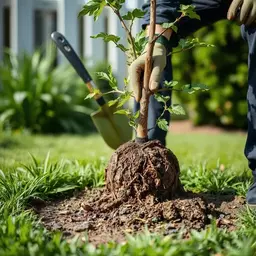

Primary Root
The main root that anchors the tree, providing stability against environmental forces.
2025-12-28
What if the secret to a tree's strength lies beneath the surface? The roots of a tree are its unsung heroes, playing a vital role in its overall health and resilience. Understanding this hidden world can transform how we care for our trees and promote their vitality.
Understanding the vital roles that different root components play in tree vitality is essential for effective tree care. For a broader perspective on maintaining tree health, consider our guide on essential tree care and landscaping.
The main root that anchors the tree, providing stability against environmental forces.
Branches that spread out to increase the tree's reach and stability while accessing nutrients.
Tiny extensions that maximize the absorption capabilities of the roots for water and nutrients.
Deep roots that anchor the tree and access groundwater, essential for survival in dry conditions.
Shallow roots that capture surface moisture and nutrients, crucial for young trees.
Roots that grow from unusual places for stability, helping trees adapt to various environments.
When we think about the health of a tree, we often focus on its leaves or trunk, but the real magic happens beneath the surface! Healthy roots are the unsung heroes of tree vitality. They anchor trees firmly in the ground, facilitate nutrient uptake, and contribute significantly to the overall strength and resilience of the plant.
Roots serve multiple purposes; they not only stabilize trees against the forces of nature but also absorb water and nutrients from the soil. Have you ever noticed how a tree sways in the wind? That’s a testament to its strong root system, which helps it endure storms while standing tall. In short, healthy roots form the backbone of a thriving tree, and understanding their importance can inspire us to care for them better.
The connection between root health and tree vitality is essential yet often overlooked. Healthy roots don’t just anchor trees; they also provide pathways for vital nutrients to reach the rest of the plant. These nutrients are essential for processes like photosynthesis, growth, and flowering.
Moreover, roots interact with the soil and its microbiome, forming a complex network. This network is crucial for nutrient exchange, disease resistance, and water absorption. To nurture this relationship, we need to focus on soil health and its contribution to root vitality. This includes understanding techniques like how to aerate soil for healthy roots.
To understand how roots support tree health, let’s break down their anatomy. Roots consist of several components, each playing a vital role in a tree's stability and growth. The main parts include the primary root, lateral roots, and root hairs.
The primary root acts as the anchor, while lateral roots spread out to increase the tree's reach. Root hairs, though tiny, are incredibly important! They increase the surface area of the roots, allowing for more efficient nutrient and water absorption.
By understanding these components, we can appreciate why nurturing root health is so vital. At Deep Roots Journal, I aim to equip you with knowledge to make informed decisions about your tree care practices!
Root systems are more complex than they might appear. They serve as an intricate network that supports a tree's overall health and adaptability. The configuration of roots can vary significantly between species, and this diversity allows trees to thrive in various environments.
Some trees develop deep taproots, while others have a more fibrous system that spreads close to the surface. This diversity is essential for accessing different soil layers and moisture levels. By examining root systems, we can better understand how trees respond to environmental challenges and what practices can enhance their health. For more detailed information on maintaining strong foundations, explore our article on deep roots for stable trees.
Understanding these different root types helps us appreciate their crucial role in sustaining tree vitality, guiding us toward effective care strategies.
Just like us, trees need the right nutrients to thrive. Healthy roots rely on a balanced diet rich in essential minerals. This section will explore the key components that contribute to optimal root health.
Providing trees with the right nutrients fosters vigorous growth and helps them withstand environmental stressors. As we dive deeper, let’s discover what these essential nutrients are!
Here's a brief recap of the key points discussed so far:
Many gardeners and tree enthusiasts often have questions about maintaining their trees' root health. I believe that understanding these queries can empower us to nurture our green companions better! In this section, we'll explore some frequently asked questions (FAQs) related to root care and how we can enhance tree vitality.
When it comes to tree root health, there are common concerns that many of us share. Here are some questions I often hear:
By addressing these questions, I hope to clarify any uncertainties and help you make informed decisions regarding your trees. Remember, a little knowledge goes a long way in ensuring that our trees remain healthy and vibrant!
Nothing illustrates the importance of root health better than real-life examples. Here are a couple of case studies that highlight successful interventions:
These case studies remind us of the transformative power of effective root care! I find it inspiring to see how simple interventions can lead to remarkable improvements in tree vitality.
When we talk about tree and root care, it's essential to think long-term. By investing time and resources now, we can nurture healthy trees for future generations. In this section, I want to share some strategies that I've found helpful in my own gardening journey.
Understanding the benefits of different interventions can make a significant difference in your approach to tree care. Here are some points to consider:
By weighing these options, we can make informed choices that support our trees and the environment. It’s about finding balance!
Regular assessments can help us stay proactive about tree health. Consider incorporating the following steps into your routine:
Monitoring our trees allows us to catch potential issues early on and respond effectively. It’s like having a health check-up for our beloved plants!
As we wrap up this discussion on root health, I want to emphasize how crucial it is to prioritize tree care. By understanding the complexities of root systems and committing to proactive strategies, we can ensure that our trees flourish. I encourage everyone to consider soil testing and to implement practices that support root vitality. Together, we can cultivate a healthier, more resilient environment, one tree at a time! For guidance on choosing the right trees, refer to our article on selecting trees for your garden.
Here is a quick recap of the important points discussed in the article:
Rowan Thorne
Horticulturist. Environmental advocate. Nature enthusiast.
Rowan Thorne brings years of hands-on experience in botany and root care, sharing practical tips and expert insights to help you nurture a thriving natural environment. Follow along at DeepRootsJournal.com for fresh, inspiring content that deepens your connection to the ecosystem.
Discover the intricate world of tree species, soil health, and root care through our expert insights. We are passionate horticulturists dedicated to helping you cultivate a thriving natural environment.