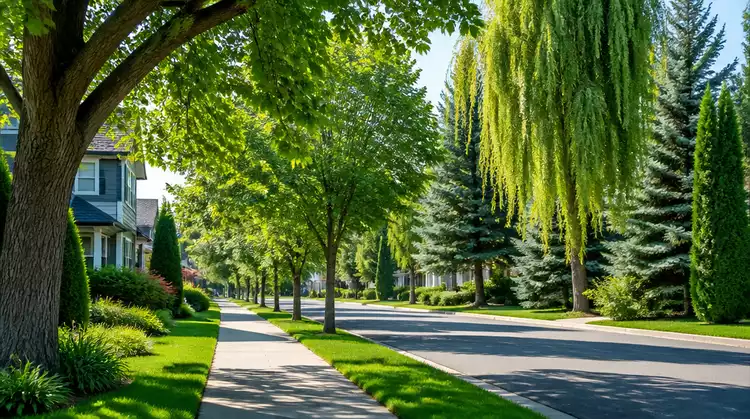
Did you know that trees can significantly lower noise levels in urban environments? By strategically planting noise-reducing trees, you can transform your neighborhood into a tranquil oasis, enhancing both your well-being and quality of life.
What You Will Learn
Noise-reducing trees help improve mental health by reducing stress and anxiety caused by urban noise.
Incorporating trees into urban spaces fosters community interaction and encourages outdoor activities.
Trees serve as natural sound barriers, with leaves, trunks, and dense foliage each contributing to noise reduction.
Selecting the right tree species based on local climate can maximize noise reduction benefits.
A wider buffer of trees, ideally 30 feet or more, significantly enhances the effectiveness of noise reduction.
Every decrease of 3 decibels is perceived as halving the noise, making tree placement crucial.
Maple, Oak, and Pine trees are excellent choices for their noise-blocking capabilities, depending on your region.
Decibel Reduction and Buffer Width in Noise-Reducing Trees
Understanding the effectiveness of noise-reducing trees can greatly enhance your urban living experience. Below are key insights into how decibel reduction and buffer width play a crucial role in noise mitigation. Essential tree care and landscaping also contribute to the overall health and effectiveness of these natural sound barriers.
Key Insights on Decibel Reduction
Noise reduction can be measured in decibels (dB), with a decrease of 3 dB perceived as halving the noise.
A wide buffer of trees (around 30 feet or more) enhances noise reduction effects.
Species with dense foliage are more effective in absorbing and blocking sound waves.
Understanding Buffer Width Impact
Wider buffers provide better sound attenuation.
Tree height and foliage density are essential for effective noise blocking.
Decibels are logarithmic; every increase of 10 dB signifies a tenfold increase in sound intensity.
Understanding the Importance of Noise-Reducing Trees in Busy Neighborhoods
Living in a bustling urban area comes with its own set of challenges, and noise is often one of the biggest nuisances. The clamor of traffic, construction, and even late-night revelry can disrupt our peace and affect our well-being. That's where noise-reducing trees come into play! They not only beautify our surroundings but also provide a natural shield against unwanted sounds.
Imagine stepping into your backyard and feeling the stress of the day melt away as you listen to the rustle of leaves instead of honking horns. By understanding the role trees play in moderating noise, we can create more tranquil spaces in our busy neighborhoods. It’s a simple yet profound change that can enhance our quality of life.
Why Noise Reduction Matters for Urban Living
Noisy environments can lead to increased stress levels, sleep disturbances, and even negative health impacts over time. Studies show that chronic exposure to high noise levels is linked to various health issues, including anxiety and heart disease. Therefore, implementing noise-reducing solutions is crucial for maintaining our well-being in urban settings. Soil compaction's effect on roots can also impact the growth and health of trees, thereby affecting their noise reduction capabilities.
Furthermore, reducing noise pollution can enhance the overall experience of our communities. It fosters a more inviting atmosphere, encourages outdoor activities, and promotes social interactions. Have you ever thought about how the sounds around you affect your mood? By incorporating trees into our urban landscapes, we can create a more serene environment for everyone!
Improves mental health and reduces stress.
Encourages outdoor activities and social interactions.
Enhances property value with natural beauty.
How Trees Can Serve as Natural Sound Barriers
Trees act as effective sound barriers due to their physical structure and the way they interact with sound waves. When sound hits a tree, it can be absorbed, deflected, or refracted, which diminishes its intensity before it reaches our ears. This is particularly helpful in busy neighborhoods where noise levels can be overwhelming.
Not only do the leaves and branches absorb sound, but the trunks and bark also play a role in reducing noise. Different tree species have varying abilities to block sound, which is why it’s essential to choose the right ones for your specific needs. At Deep Roots Journal, we’re passionate about educating our community on these vital connections and helping you select the best trees for your space!
Leaves help absorb sound waves.
Trunks and bark contribute to sound deflection.
Dense foliage provides better noise reduction.
Quick Summary
Here's a brief recap of the key points discussed so far:
Noisy urban environments can lead to increased stress and health issues.
Trees serve as effective natural sound barriers, absorbing and deflecting noise.
Choosing the right tree species and considering factors like buffer width are essential for maximizing noise reduction.
Evaluating the Effectiveness of Noise-Reducing Trees
When it comes to urban living, understanding how effective noise-reducing trees can be is crucial. They provide more than just beauty; they can make a significant difference in our daily lives. At Deep Roots Journal, we believe that evaluating the effectiveness of these natural sound barriers helps you make informed decisions for your green space.
One way to assess noise reduction is by looking at real-world data. Studies have shown that trees can lower noise levels by absorbing sound and acting as physical barriers. Have you ever noticed how the sounds of a bustling city fade when you walk through a park lined with trees? It’s those trees working hard to create a peaceful environment!
Real-World Data: Noise Reduction Measurements
When we dive into the specifics of how noise reduction works, one important factor to understand is decibel reduction and the impact of buffer width. Generally, a wider buffer of trees can provide greater noise reduction. Here are some key points to consider:
Noise reduction can be measured in decibels (dB), with a decrease of 3 dB perceived as halving the noise.
A wider buffer of trees (around 30 feet or more) can significantly enhance noise reduction effects.
Species with dense foliage are more effective in absorbing and blocking sound waves.
As you explore which trees might work best for your space, consider how local climate can affect your choices. Different species thrive in varying conditions, so knowing your region can guide you in selecting trees for your area that will effectively combat noise.
Understanding Decibel Reduction and Buffer Width
Decibel reduction is a critical metric when evaluating the noise-mitigating effects of trees. For those of us living in busy neighborhoods, understanding how sound travels and how trees interact with noise can be enlightening. Here are some insights to keep in mind:
Decibels are a logarithmic measure, meaning every increase of 10 dB represents a tenfold increase in sound intensity!
Buffer width is the distance between the noise source and the trees; wider buffers provide better sound attenuation.
Tree height and foliage density are essential factors—taller and denser trees can block more noise effectively.
Climate and Regional Recommendations for Tree Selection
When choosing trees for noise reduction, it’s essential to factor in your local climate. For instance, trees that thrive in temperate zones might not perform well in tropical climates. Here are some regional recommendations:
In colder regions, consider Maple trees for their dense canopies and year-round beauty.
For warmer climates, Oak trees provide robust growth and excellent sound-blocking capabilities.
If you reside in areas with high winds, Pine trees can withstand harsh conditions while also serving as noise barriers.
Regional Favorites: Maple Trees, Oak Trees, and Pine Trees
These trees are not just effective in noise reduction; they also bring unique beauty and benefits to your landscape. Here are their advantages:
Maple Trees: Known for their vibrant fall colors, they also boast a thick canopy ideal for noise absorption.
Oak Trees: With their sturdy structure and large size, they create an impressive sound barrier while supporting local wildlife.
Pine Trees: Evergreen and resilient, they provide year-round coverage, blocking noise even in winter months.
Frequently Asked Questions About Noise-Reducing Trees
Q1: How do trees reduce noise?
A1: Trees reduce noise by absorbing, deflecting, and refracting sound waves with their leaves, branches, trunks, and dense foliage, diminishing sound intensity before it reaches our ears.
Q2: What is the ideal buffer width for effective noise reduction?
A2: A wider buffer of trees, ideally 30 feet or more, significantly enhances the effectiveness of noise reduction.
Q3: Which tree species are best for noise reduction?
A3: Maple, Oak, and Pine trees are excellent choices for their noise-blocking capabilities, depending on your region and climate.
Q4: How much noise can trees reduce?
A4: Noise reduction can be measured in decibels (dB), with a decrease of 3 dB being perceived as halving the noise. The actual reduction depends on factors like buffer width and foliage density.
Q5: Does noise reduction from trees improve mental health?
A5: Yes, noise-reducing trees help improve mental health by lowering stress and anxiety caused by urban noise, contributing to overall well-being.
At Deep Roots Journal, we advocate for thoughtful tree selection to enhance your living space and reduce noise pollution. By understanding how trees interact with sound, you can create a more peaceful environment that elevates your quality of life. Each tree you plant is a step towards a quieter, more serene neighborhood! You can also find more information on selecting trees for your garden to ensure maximum noise reduction benefits.
Recap of Key Points
Here is a quick recap of the important points discussed in the article:
Noise-reducing trees improve mental health by lowering stress and enhancing well-being.
Trees act as natural sound barriers by absorbing and deflecting sound waves.
A wider buffer of trees (30 feet or more) significantly enhances noise reduction effects.
Choosing tree species with dense foliage is crucial for effective sound absorption.
Local climate influences tree selection; consider regional favorites like Maple, Oak, and Pine for optimal results.
Rowan Thorne brings years of hands-on experience in botany and root care, sharing practical tips and expert insights to help you nurture a thriving natural environment. Follow along at DeepRootsJournal.com for fresh, inspiring content that deepens your connection to the ecosystem.
Discover the intricate world of tree species, soil health, and root care through our expert insights. We are passionate horticulturists dedicated to helping you cultivate a thriving natural environment.