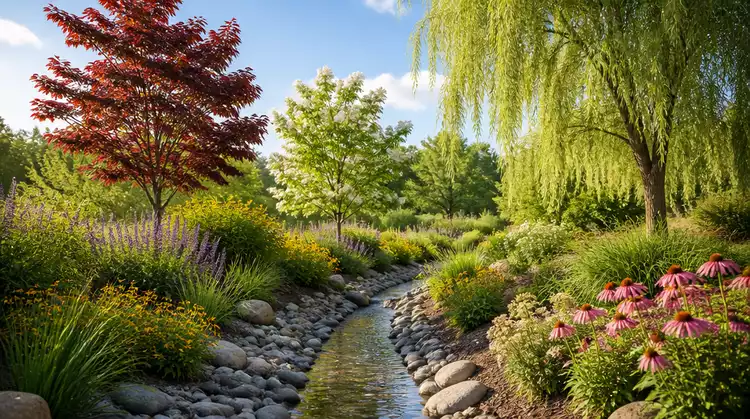

Stormwater Management
Trees absorb excess rainwater, preventing flooding and promoting groundwater recharge.
2026-10-14
What if the simplest addition to your garden could significantly improve water management and local biodiversity? Trees, when integrated into rain gardens and bioswales, offer profound ecological benefits that go beyond mere aesthetics. As we explore these natural solutions, you'll discover the vital role trees play in enhancing our urban landscapes.
Exploring how trees contribute to stormwater management, biodiversity, and ecosystem health.
Trees absorb excess rainwater, preventing flooding and promoting groundwater recharge.
Provide habitats for wildlife, supporting pollinators and diverse species.
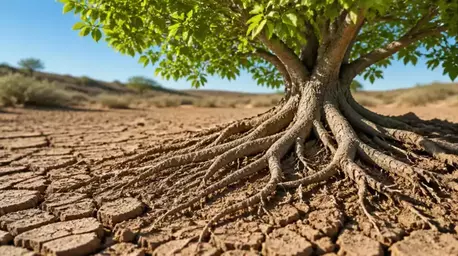
Root systems stabilize soil, preventing erosion during heavy rainfall.
Enhance the beauty of urban landscapes, contributing to community wellbeing.
The integration of trees into rain gardens and bioswales plays a significant role in managing stormwater. By absorbing excess rainwater and filtering pollutants, trees help to maintain a healthier ecosystem. At Deep Roots Journal, we believe that understanding these roles is crucial for creating sustainable landscapes that can thrive in various environmental conditions.
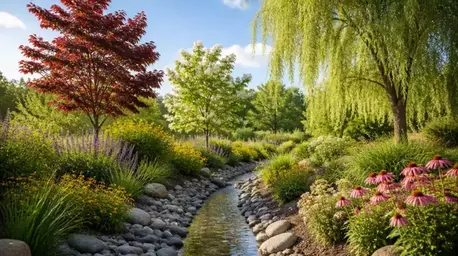
Rain gardens and bioswales are designed to capture stormwater runoff, which can lead to flooding and erosion if left unmanaged. Trees, with their robust root systems, contribute to the overall health of these green infrastructures. Have you ever noticed how trees seem to stabilize soil on slopes? This is precisely what they do—they anchor the soil, preventing erosion, and promote infiltration, allowing water to soak into the ground. For more insights, learn about deep roots for stable trees.
Rain gardens and bioswales are essential tools for managing stormwater effectively. They help recharge groundwater levels and reduce the risk of flooding in urban areas. This not only protects infrastructure but also enhances the natural beauty of our surroundings.
By incorporating vegetation such as trees, we can further enhance these systems. Some of the key benefits include:
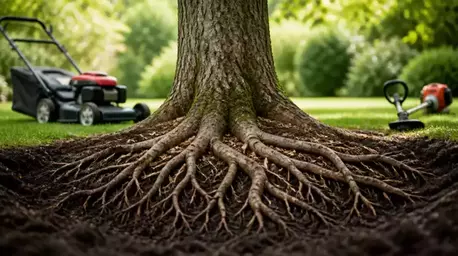
Trees are not just beautiful additions to our landscapes; their roots play a vital role in soil health. The roots help to create channels in the soil, allowing for greater water infiltration. This means that less water runs off into storm drains and more gets absorbed into the ground.
Moreover, trees significantly contribute to erosion control by stabilizing the soil. Their root systems act like a net, holding the soil in place and preventing it from washing away during heavy rains. For anyone interested in enhancing their garden or landscape, this is a critical factor to consider!
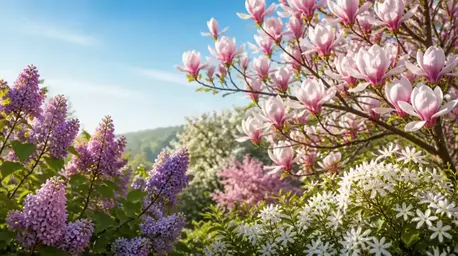
In addition to managing stormwater, trees in rain gardens and bioswales enhance biodiversity. They provide essential habitats for a variety of wildlife, from birds to insects. Biodiversity is crucial for a resilient ecosystem, and by choosing the right tree species, we can attract beneficial organisms that further support soil health. Learn more about stable root systems in trees.
Here are some ways trees enhance biodiversity:
By incorporating trees into our green infrastructure, we create thriving environments that support life at every level! As I explore the connections between tree species and soil health, it becomes clear that understanding these dynamics is key to sustainable landscaping. Let’s dive deeper into selecting the right trees for your projects in the next section!
Here's a brief recap of the key points discussed so far:
Here are some common questions about integrating trees into rain gardens and bioswales:
When it comes to maintaining *healthy trees* in rain gardens and bioswales, a little foresight goes a long way! Long-term care is essential for ensuring that trees thrive and continue to provide their many benefits, from stormwater management to enhancing biodiversity. Each species has unique needs, and understanding these can help us make informed decisions about their care. Here’s where we can dive deeper into the maintenance trade-offs, soil volume, drainage, and pruning practices that will keep our trees happy and healthy. For more comprehensive guidance, check out our article on essential tree care and landscaping.
Every tree species presents its own set of challenges and requirements. Some may demand more attention, while others are more forgiving. It's crucial to assess the maintenance trade-offs, especially when planning your rain garden or bioswale. Here are some factors to consider as you think about the long-term care of your trees:
By weighing these factors, we can select tree species that align with our maintenance preferences, ensuring that our projects remain manageable and enjoyable!
Maintaining adequate soil volume and proper drainage is essential for the health of trees in rain gardens and bioswales. Trees need sufficient soil to establish strong roots and access nutrients. Here are some key considerations:
Incorporating these strategies not only supports healthy tree growth but also contributes to the overall functionality of your rain garden or bioswale. You may also be interested in soil types for tree roots.
Regular pruning is a vital part of tree care that helps maintain a healthy canopy and encourages vigorous growth. Here are some effective pruning strategies:
By practicing good pruning habits, we can promote robust canopy development while also ensuring our trees look beautiful in our rain gardens and bioswales!
As we continue to explore the wonders of tree species and their roles in rain gardens and bioswales, let’s remember that maintaining these valuable resources requires a commitment to long-term care. By implementing the strategies discussed and engaging our community in these green initiatives, we can cultivate not only healthy trees but also a sustainable environment that benefits us all. To learn more about environmental benefits, read our article on benefits of native tree planting.
At Deep Roots Journal, I am passionate about helping you make informed decisions about trees and their care, so we can all contribute to a thriving ecosystem together!
Here is a quick recap of the important points discussed in the article:
Rowan Thorne
Horticulturist. Environmental advocate. Nature enthusiast.
Rowan Thorne brings years of hands-on experience in botany and root care, sharing practical tips and expert insights to help you nurture a thriving natural environment. Follow along at DeepRootsJournal.com for fresh, inspiring content that deepens your connection to the ecosystem.
Discover the intricate world of tree species, soil health, and root care through our expert insights. We are passionate horticulturists dedicated to helping you cultivate a thriving natural environment.